About PISI - WHAT WE ARE ALL ABOUT
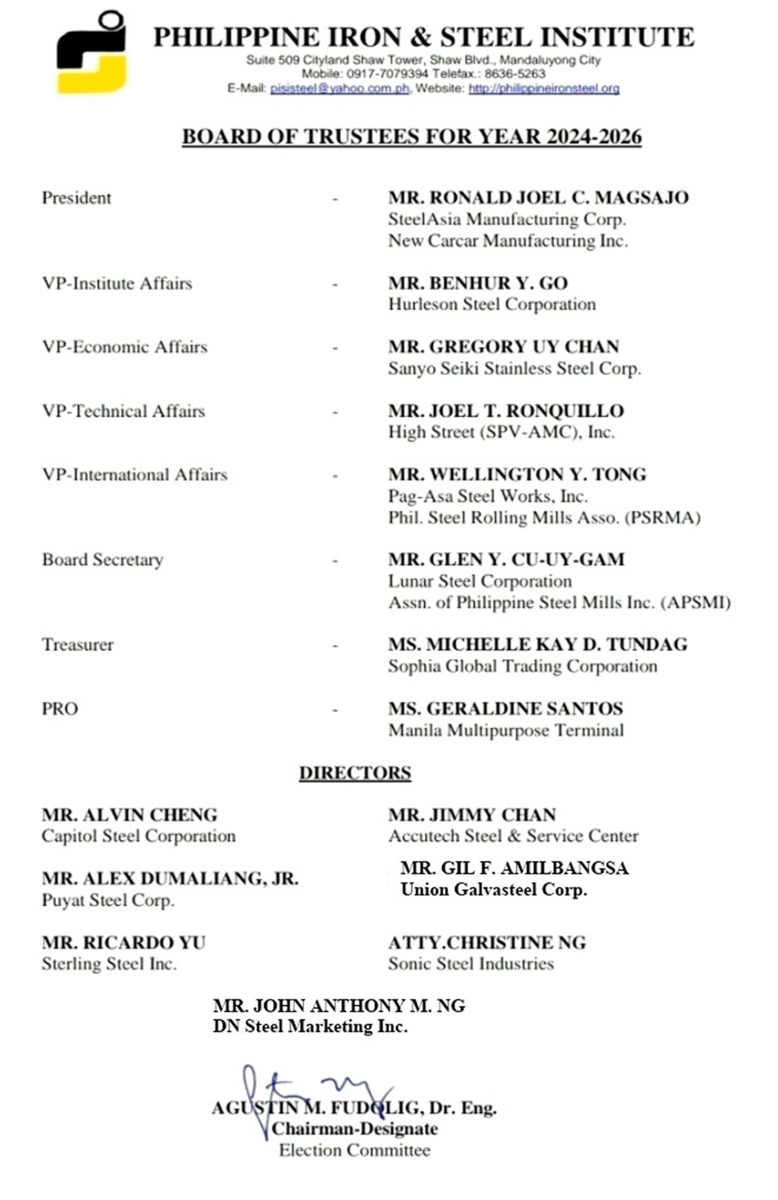
The Philippine Iron & Steel Institute (PISI) is the premier organization officially recognized by the Philippine government to represent the nation’s iron and steel industry. Founded to serve as a catalyst for growth, PISI is committed to enhancing global competitiveness and ensuring sustainable development across the sector. It remains steadfast in its mission to uphold quality, encourage innovation, and foster industry-wide progress.
ABOUT US
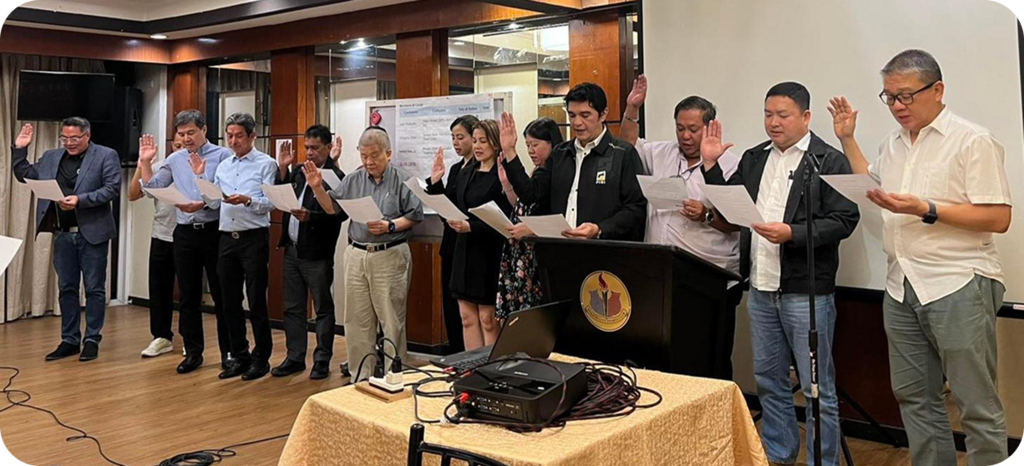
The story of the Philippine iron and Steel industry is closely tied to the growth of the Philippine Iron & Steel Institute (PISI). For over seven decades, PISI has been at the forefront of promoting industry development, advocating quality standards, and supporting national progress.
1950s – The Beginnings of Steel in the Philippines
1952 – The government initiated a steel project in Iligan City, Mindanao through the National Shipyards and Steel Corporation (NASSCO), producing reinforcing steel bars using an Electric Arc Furnace and Bar Rolling Mill.
1960s – Integration and Institution Building
1963 – Iligan Integrated Steel Mills Inc. (IISMI) was formed by the Jacinto Group and the government to establish a fully integrated steel mill. NASSCO’s assets and operations were absorbed by IISMI.
In the same year, the Philippine Iron and Steel Institute (PISI) was established, with Mr. Jose P. Marcelo as its first President. PISI was registered with the Securities and Exchange Commission (SEC) as a non-stock, non-profit organization.
1964 – Mr. Manuel Elizalde Sr. was elected PISI President.
1969 – IISMI completed the Hot Mill and Cold Mill in Iligan City to produce hot-rolled and cold-rolled coils. The Elizalde Group also built a Cold Mill and Electrolytic Tinning Line in Pasig, Metro Manila.
1970s – Regional and National Expansion
1971 – A new PISI Board of Trustees was elected, with Mr. Dominador de Jesus as President. In the same year, PISI became a founding member of the Southeast Asia Iron & Steel Institute (SEAISI), incorporated under the United Nations Economic Commission for Asia and the Far East (ECAFE).
1972–1974 – With the declaration of Martial Law, the government sequestered IISMI, which was later transferred to the National Steel Corporation (NSC) in 1974.
1975 – PISI worked closely with the government’s Metals Industry Research and Development Center (MIRDC) to plan an integrated iron and steel mill under the Major Industrial Projects program.
1978 – NSC expanded by acquiring assets of Elizalde Group, Philippine Blooming Mills (PBM), Philippine Plate Mills Inc. (PPMCI), and Visayan Iron & Steel Company (VISCO).
1980s – Modernization Efforts
1982 – Philippine Sinter Corporation (PSC), a subsidiary of Kawasaki Steel Corporation (now JFE), began operations, processing imported iron ore for blast furnaces in Japan.
NSC embarked on a major expansion, upgrading its hot and cold mills, tinning line, and billet steelmaking facilities.
1990s – Policy and Privatization
1990–1991 – The Iron and Steel Industry Act (Republic Act 7103) was approved, providing a legal framework for the rapid development of the sector.
1995 – Under the government’s privatization program, NSC was acquired by Malaysia’s Westmont Group through Wing Tiek. Around this time, new private investments emerged: Philsteel Group established a Cold Mill with Galvanizing Line, Bacnotan Steel built an Electric Arc Furnace and Bar Rolling Mill, and SteelAsia Manufacturing Corp. established its first Bar Rolling Mill.
1998 – The Asian Financial Crisis led to a collapse in the steel market, with Apparent Steel Consumption (ASC) plunging from 4.6 million tons in 1996 to just 3.1 million tons. PISI, together with the Philippine Constructors’ Association (PCA) and the Bureau of Product Standards (BPS), launched nationwide monitoring and enforcement against substandard steel products.
2000s – Challenges and Shifts
2003 – The Ispat Group of India, through Global Steel Philippines, took over the Iligan facilities previously owned by NSC.
2000s – The industry faced volatility, with plant closures, shifting ownership, and ongoing concerns about unfair competition and product standards.
2010s – Roadmap for Growth
2010 – After years of struggle, Apparent Steel Consumption (ASC) returned to 4 million tons. However, Global Steel Philippines shut down its Iligan operations, ending local production of hot-rolled coils, cold-rolled sheets, and tinplates.
2013 – ASC reached 6.5 million tons. PISI spearheaded the Steel Industry Roadmap Study, submitted to the Philippine government. The roadmap envisions steel demand reaching 20 million tons by 2030, with per capita consumption doubling from 63 kilograms in 2012 to 130 kilograms.
Today – PISI at the Forefront
Today, the Philippine Iron & Steel Institute (PISI) stands as the premier government-recognized organization representing the country’s steel industry. With a legacy of more than 60 years, PISI continues to champion innovation, quality, and competitiveness—serving as a catalyst for sustainable growth and industrialization in the Philippines.

ABOUT PISI